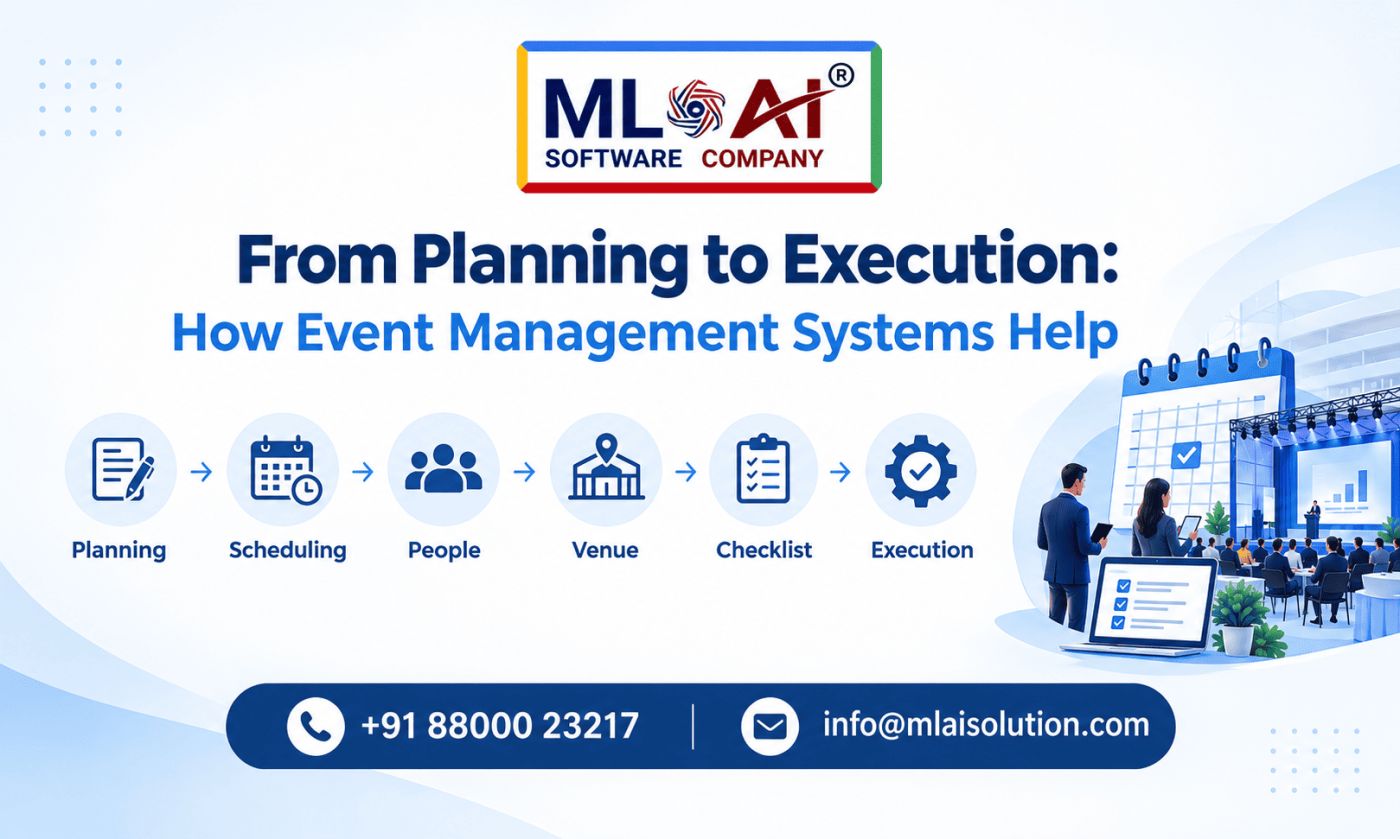
Planning an event may look simple from the outside, but organizers often manage registrations, schedules, attendees, speakers, venues, communication, payments, and post-event reporting at the same time. When these activities are handled manually, small mistakes can quickly become bigger problems.
An event management system brings these activities into a more organized digital workflow. Instead of depending on multiple spreadsheets, emails, and separate tools, event teams can manage important processes from a centralized platform.
What is an Event Management System?
An event management system is software designed to help organizations plan, organize, execute, and monitor events digitally. Depending on the platform, it can support registration, attendee management, scheduling, communication, ticketing, check-in, reporting, and other event-related activities.
For businesses organizing conferences, exhibitions, corporate meetings, workshops, seminars, or other professional events, this type of technology can reduce repetitive administrative work and improve coordination.
MLAIEvent provides a digital approach to event management, helping organizations bring different event activities into a more structured workflow.
Also, Read - How Much Does Event Management Software Cost?
How Does Event Management Software Help with Planning?
Good event planning starts well before the actual event day. Organizers need to define the event, prepare schedules, coordinate teams, manage registrations, and keep attendees informed.
An event management platform can help with these activities by providing a central place for event information. Teams can organize event details, monitor registrations, manage schedules, and keep track of important tasks.
This becomes particularly useful when several people are involved in organizing the same event. Instead of exchanging multiple spreadsheets and email updates, team members can work with information maintained within a common system.
Simplifying Registration and Attendee Management
Registration is often one of the first interactions an attendee has with an event. A complicated registration process can create unnecessary friction.
Modern event platforms can support online registration forms, attendee information, ticket categories, confirmations, and check-in processes. Some platforms can also provide waitlists, payment options, and automated communications. Cvent
For organizations looking for an event management system in India, registration and attendee management should therefore be important considerations when comparing solutions.
MLAIEvent can help businesses move registration and attendee-related activities into a more organized digital environment.
Better Scheduling and Event Coordination
Managing schedules manually becomes challenging when an event includes multiple sessions, speakers, activities, or venues. One timing change can require several updates across different documents.
Event management software can make scheduling easier by keeping event information centralized. Organizers can manage sessions, schedules, speakers, and other event details while keeping the information accessible to the relevant team members.
This can be particularly helpful for conferences and larger events where multiple activities are happening simultaneously.
Also, Read - 10 Ways Event Management Software Saves Time and Reduces Costs
Making Event-Day Execution Smoother
The success of an event depends not only on planning but also on execution. Long queues, incorrect attendee information, communication gaps, or last-minute schedule changes can affect the attendee experience.
Digital check-in, attendee lists, notifications, and real-time event information can help teams respond more efficiently during the event. Event technology can also support mobile access, reporting, and other onsite activities. Capterra
With the right setup, organizers can spend less time handling repetitive administrative work and more time focusing on the actual event experience.
Using Data After the Event
The work does not necessarily end when attendees leave. Post-event information can help organizations understand registrations, attendance, engagement, and overall performance.
Reporting and analytics features can provide useful insights for future planning. For example, organizers can compare registration numbers with actual attendance and identify areas that need improvement.
This data-driven approach can make future events more organized because decisions are based on previous event performance rather than assumptions.
How to Choose the Best Event Management Software?
The best event management software is not necessarily the one with the longest feature list. The right choice depends on the organization's event type, size, frequency, team structure, and specific requirements. Cvent
Before selecting a platform, businesses should consider:
- Registration and attendee management
- Event scheduling
- Check-in and onsite management
- Communication and notifications
- Reporting and analytics
- Integration requirements
- Ease of use and scalability
- Data security and access controls
It is also useful to evaluate whether the software can adapt as the organization's events become larger or more complex.
Why Choose MLAIEvent?
Technology is most valuable when it solves real operational problems without making processes unnecessarily complicated. MLAIEvent is designed to help organizations manage event-related activities through a structured digital platform.
For businesses searching for an event management system in India, MLAIEvent can be considered as part of a broader digital strategy for improving event planning and coordination.
The technology behind any event platform also matters. Organizations should evaluate the experience, reliability, development capabilities, and support offered by the technology provider. Choosing a best software development company can be an important step when businesses require dependable and scalable software solutions.
Frequently Asked Questions
Q1. What is an event management system?
Ans. An event management system is software that helps organizations plan, organize, execute, and monitor events through digital tools such as registration, scheduling, attendee management, communication, check-in, and reporting.
Q2. Why should businesses use event management software?
Ans. It can reduce manual work, centralize event information, improve coordination, simplify attendee management, and provide useful data for evaluating event performance.
Q3. How do I choose event management software?
Ans. Start by identifying your event type, number of attendees, required features, team workflow, integration needs, and future scalability. Then compare platforms based on those requirements rather than choosing solely by the number of features.