Planning an event is much more than booking a venue and sending invitations. Whether you're organizing a corporate conference, exhibition, seminar, workshop, or networking event, managing attendees efficiently is one of the biggest challenges. This is where an attendee management system becomes essential.
An attendee management system helps event organizers handle registrations, ticketing, check-ins, communication, attendance tracking, and reporting from a single platform. When integrated with a modern event management system, it creates a seamless experience for both organizers and participants.
Businesses across India are increasingly adopting digital event solutions to reduce manual work, improve attendee experiences, and make data-driven decisions. Platforms like MLAIEvent provide organizations with smart event management capabilities designed for modern business events.
Also, Read more here - What is an Event Management System? A Complete Guide for Modern Businesses
What is an Attendee Management System?
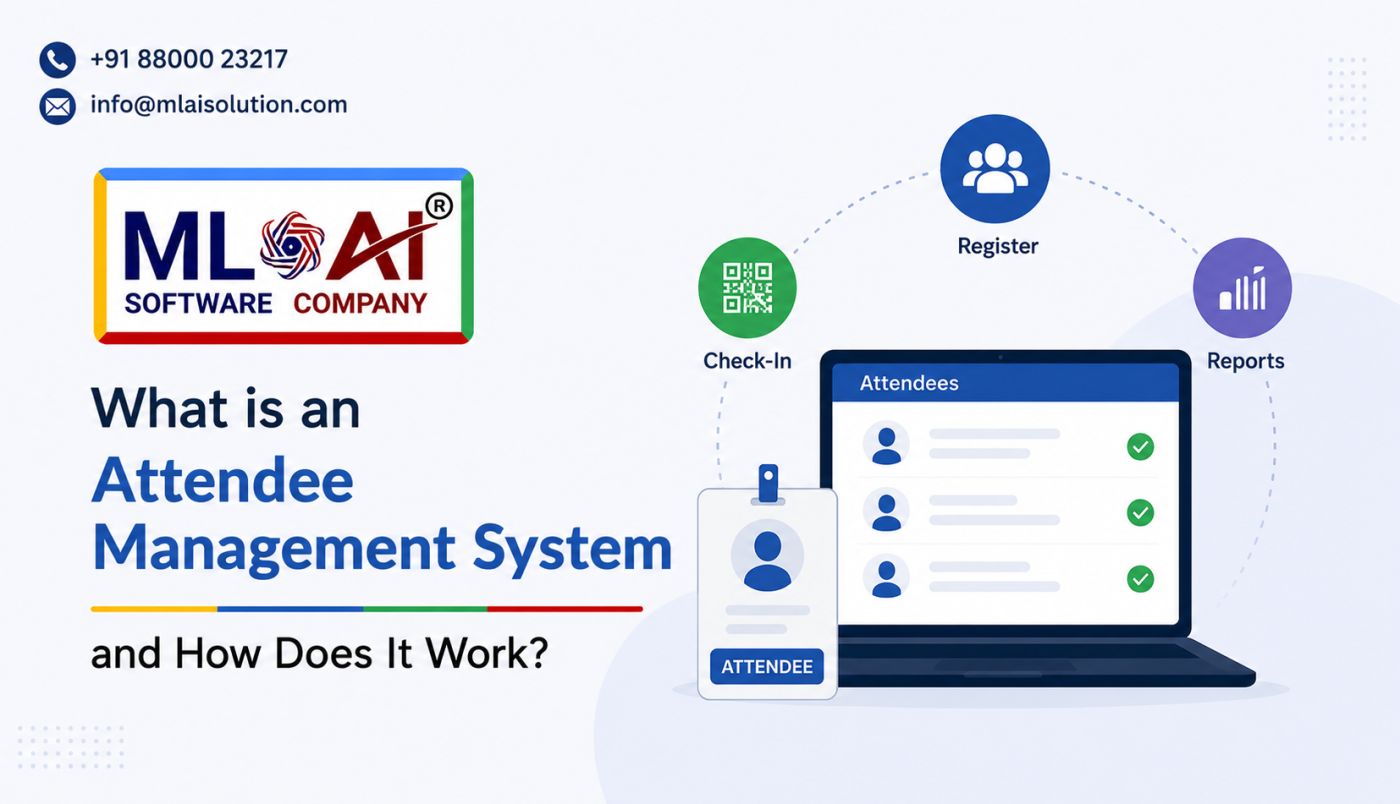
An attendee management system is software that automates the complete attendee lifecycle before, during, and after an event.
Instead of managing spreadsheets, paper registrations, or manual attendance, the system centralizes attendee information in one secure dashboard.
It helps organizers:
1. Register attendees online
2. Manage ticketing and invitations
3. Send confirmations and reminders
4. Generate QR codes or digital passes
5. Track event attendance
6. Collect attendee feedback
7. Analyze event performance
Whether your event has 50 attendees or 10,000 participants, the system keeps attendee information organized and accessible.
What is an Event Management System?
An event management system is a comprehensive platform that helps organizations plan, execute, monitor, and analyze events from start to finish.
While attendee management focuses specifically on participants, an event management system manages the complete event ecosystem, including:
1. Event planning
2. Registration
3. Venue management
4. Session scheduling
5. Speaker management
6. Attendee management
7. Vendor coordination
8. Communication
9. Analytics
10. Reporting
Think of attendee management as one important module within a larger event management system.
How Does an Attendee Management System Work?
A modern attendee management system follows a simple yet efficient workflow.
1. Event Creation
Organizers create an event by adding:
1. Event name
2. Date and time
3. Venue
4. Speakers
5. Sessions
6. Registration rules
7. Ticket categories
This information is then published through an event registration page.
2. Online Registration
Participants register online by filling out a registration form.
The system automatically stores information such as:
1. Name
2. Email
3. Phone number
4. Organization
5. Designation
6. Ticket type
7. Preferences
This removes manual data entry and reduces errors.
3. Confirmation and Notifications
After successful registration, attendees automatically receive:
1. Confirmation email
2. Registration details
3. QR code
4. Event schedule
5. Venue information
6. Reminder notifications
Automated communication improves attendee engagement while reducing administrative effort.
4. QR Code or Digital Check-In
On the event day, attendees simply present their QR code or digital pass.
Staff scan the code using a mobile device to complete check-in within seconds.
Benefits include:
1. Faster entry
2. Reduced waiting time
3. Accurate attendance records
4. Better crowd management
5. Live Attendance Tracking
Organizers can monitor attendance in real time.
The dashboard displays:
1. Total registrations
2. Checked-in attendees
3. No-shows
4. Session participation
5. Peak entry times
This information helps event teams make informed decisions during the event.
6. Post-Event Reports
After the event, organizers receive detailed analytics including:
1. Attendance percentage
2. Registration trends
3. Popular sessions
4. Feedback responses
5. Engagement reports
These insights help improve future events.
Key Features of an Attendee Management System
An effective attendee management solution usually includes:
1. Online Registration: Allow attendees to register anytime from any device.
2. Digital Invitations: Send invitations through email or SMS.
3. QR-Based Check-In: Enable contactless and faster entry.
4. Badge Printing: Generate professional attendee badges instantly.
5. Attendance Tracking: Monitor attendee participation in real time.
6. Automated Communication: Send reminders, updates, and follow-up emails automatically.
7. Feedback Collection: Collect surveys after the event to measure satisfaction.
8. Dashboard and Reports: Access detailed event insights from one place.
Benefits of Using an Attendee Management System
1. Saves Time: Automation eliminates repetitive manual tasks like data entry, attendee verification, and attendance tracking.
2. Improves Attendee Experience: Quick registrations, instant confirmations, and fast check-ins create a professional event experience.
3. Reduces Errors: Manual spreadsheets often contain duplicate or incorrect entries. Automated systems improve data accuracy.
4. Better Event Planning: Real-time attendee data helps organizers allocate seating, food, materials, and staff efficiently.
5. Enhanced Security: QR code verification ensures only registered participants enter the venue.
6. Easy Communication: Keep attendees informed with automated reminders, schedule updates, and announcements.
7. Data-Driven Decisions: Detailed reports help measure event success and improve future planning.
Who Can Use an Attendee Management System?
Almost every industry organizing events can benefit from attendee management software.
Common users include:
1. Corporate organizations
2. Educational institutions
3. Government departments
4. Healthcare organizations
5. Trade exhibitions
6. Technology conferences
7. Training companies
8. Startups
9. Business networking groups
10. Professional associations
Why Businesses in India Are Choosing Digital Event Management Systems
India has witnessed rapid growth in corporate events, exhibitions, educational seminars, startup conferences, and hybrid events. Managing hundreds or thousands of attendees manually is no longer practical.
A modern event management system enables organizations to:
1. Reduce paperwork
2. Improve operational efficiency
3. Increase attendee satisfaction
4. Manage hybrid and in-person events
5. Access real-time analytics
6. Scale events of any size
As businesses embrace digital transformation, cloud-based event management platforms have become an essential part of successful event execution.
How MLAIEvent Simplifies Event and Attendee Management
MLAIEvent provides an integrated event management system designed to simplify event planning from registration to reporting.
With its attendee management capabilities, organizations can:
1. Create and publish events quickly
2. Manage attendee registrations online
3. Generate QR-based entry passes
4. Monitor attendance in real time
5. Send automated notifications
6. Access comprehensive event analytics
7. Improve event efficiency through centralized management
Whether you're organizing a corporate conference, educational seminar, product launch, or business exhibition, MLAIEvent helps streamline the entire event lifecycle while delivering a seamless attendee experience.
Frequently Asked Questions (FAQs)
Q1. What is an attendee management system?
Ans. An attendee management system is software that manages attendee registration, communication, check-in, attendance tracking, and reporting for events through a centralized platform.
Q2. Is attendee management part of an event management system?
Ans. Yes. Attendee management is one of the core modules of a complete event management system, which also includes planning, scheduling, venue management, communication, and reporting.
Q3. How does QR code check-in work?
Ans. Each registered attendee receives a unique QR code. At the venue, staff scan the code to verify registration and record attendance instantly.
Q4. Can attendee management software be used for virtual and hybrid events?
Ans. Yes. Modern attendee management platforms support physical, virtual, and hybrid events by managing registrations, online participation, and engagement from a single dashboard.
Q5. Why should businesses use an event management system?
Ans. An event management system helps organizations automate event planning, improve attendee experiences, reduce manual work, enhance security, and gain valuable insights through analytics.
Conclusion
An attendee management system is no longer a luxury—it's an essential tool for organizations that want to deliver professional, organized, and engaging events. From online registrations and QR-based check-ins to real-time attendance tracking and post-event analytics, it simplifies every stage of attendee management.
When combined with a powerful event management system, businesses can streamline operations, improve participant experiences, and make every event more successful. Solutions like MLAIEvent enable organizations across India to manage events efficiently while embracing digital transformation and delivering seamless experiences for attendees and organizers alike.